Keep the first signal in its place.
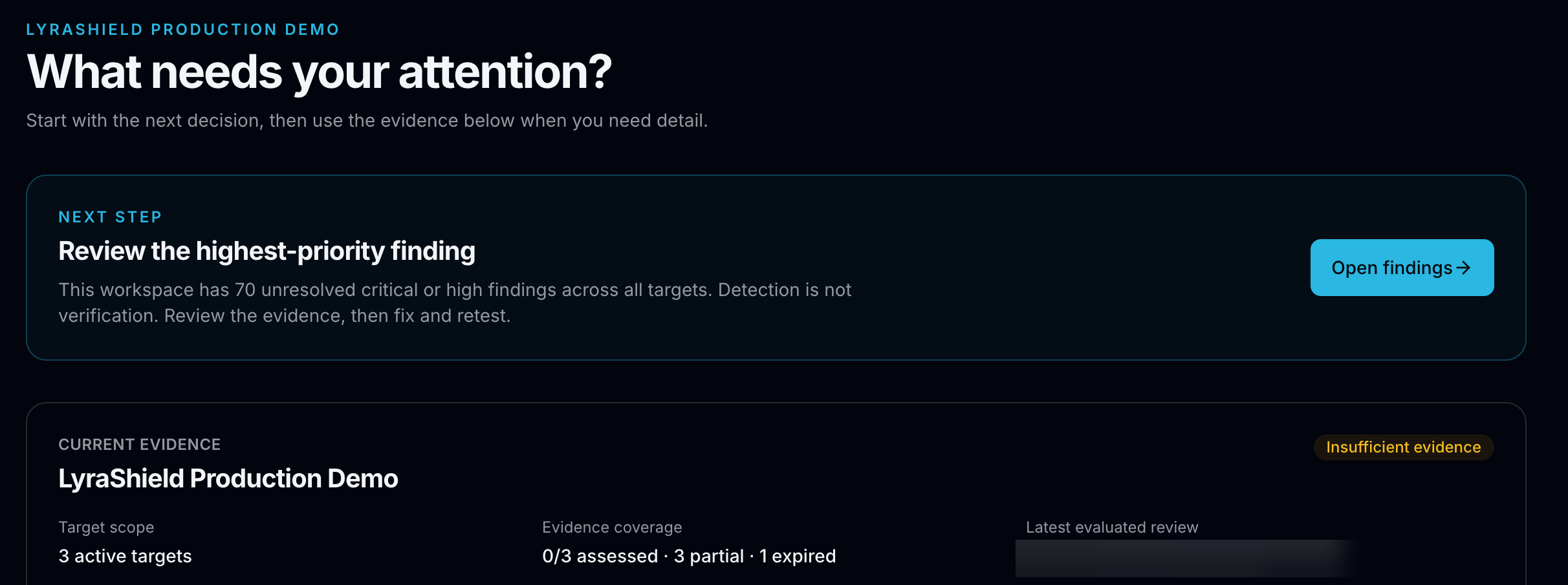
A scanner can point to a credential reference in a client build. That is a reason to investigate. It does not, by itself, tell a release owner whether a credential was exposed or whether a later change fixed the problem.
I designed the report to retain the source and scope of the finding. Collected evidence can then support a stronger conclusion. Raising a confidence score never takes the place of collecting that evidence.
Tie approval to the proposed change.
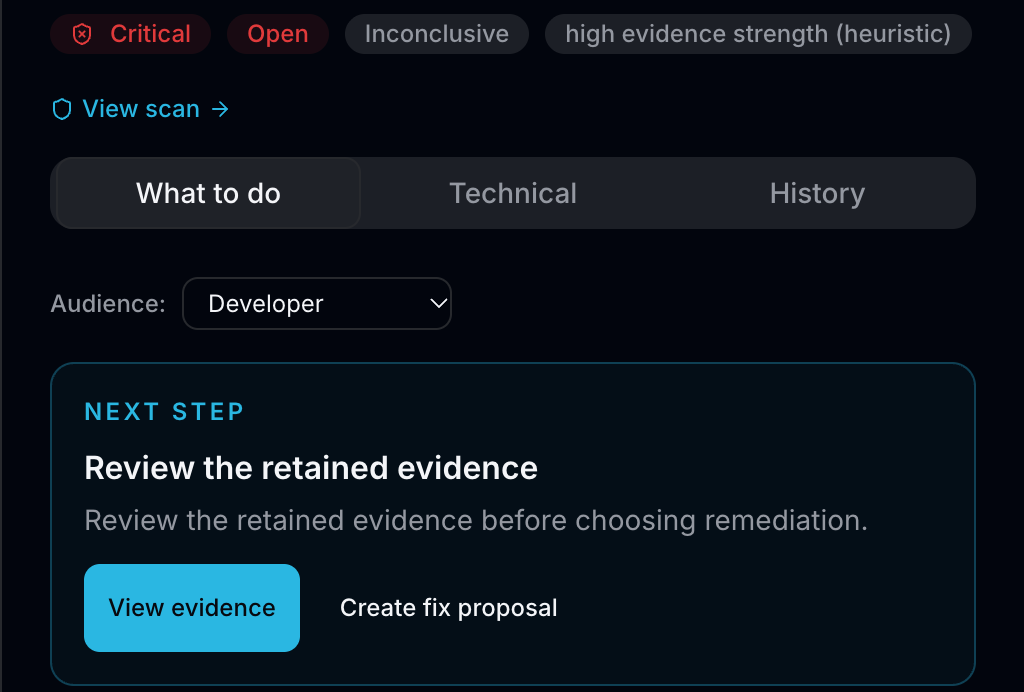
I designed scoped authorization around a fix proposal. A reviewer can inspect what would change and why before approving it. Approval belongs to that proposal; a different patch needs its own review.
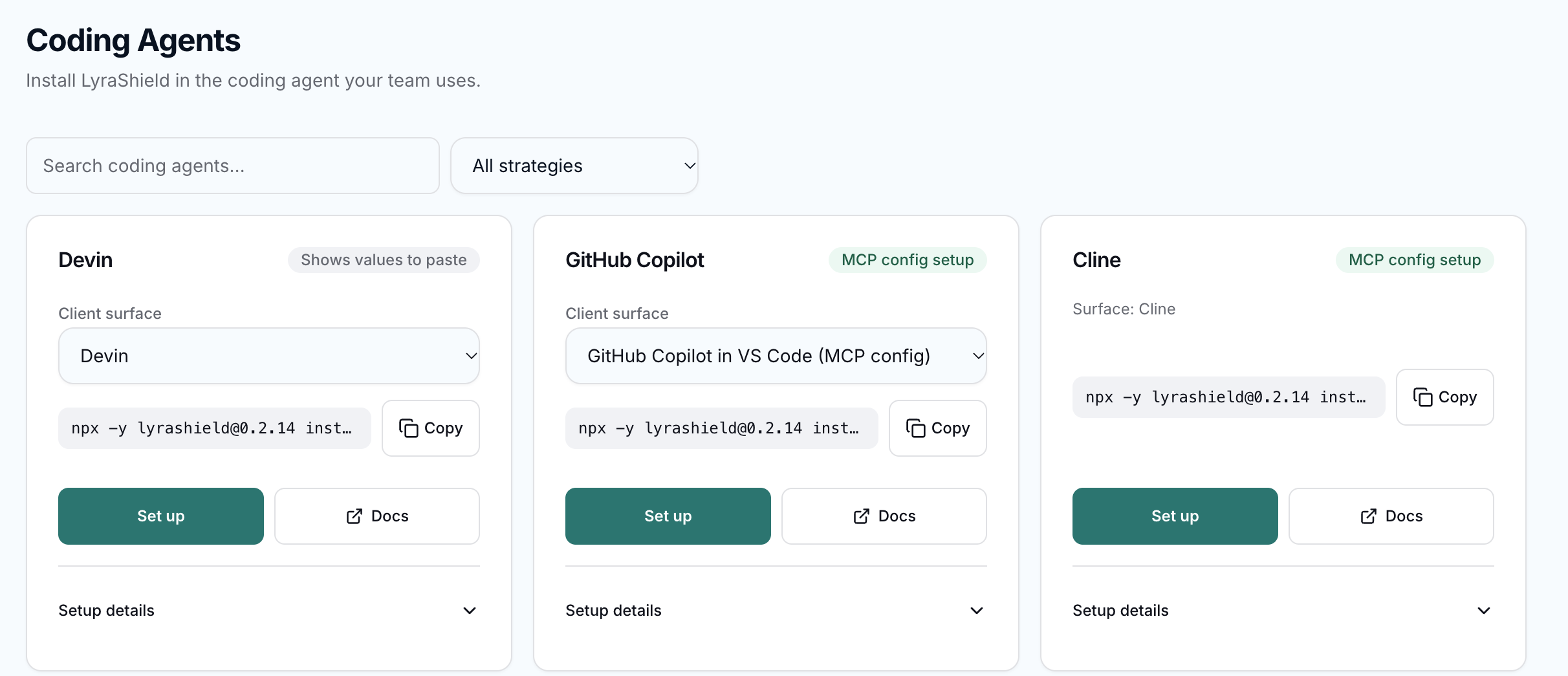
The same boundary matters when coding agents participate. Repository text and tool output are inputs to inspect. They cannot expand what the user authorized.
Let a retest stay inconclusive.
After a change, the useful question is whether the original condition can still be observed within the recorded scope. If the evidence is incomplete, the report keeps the result inconclusive.
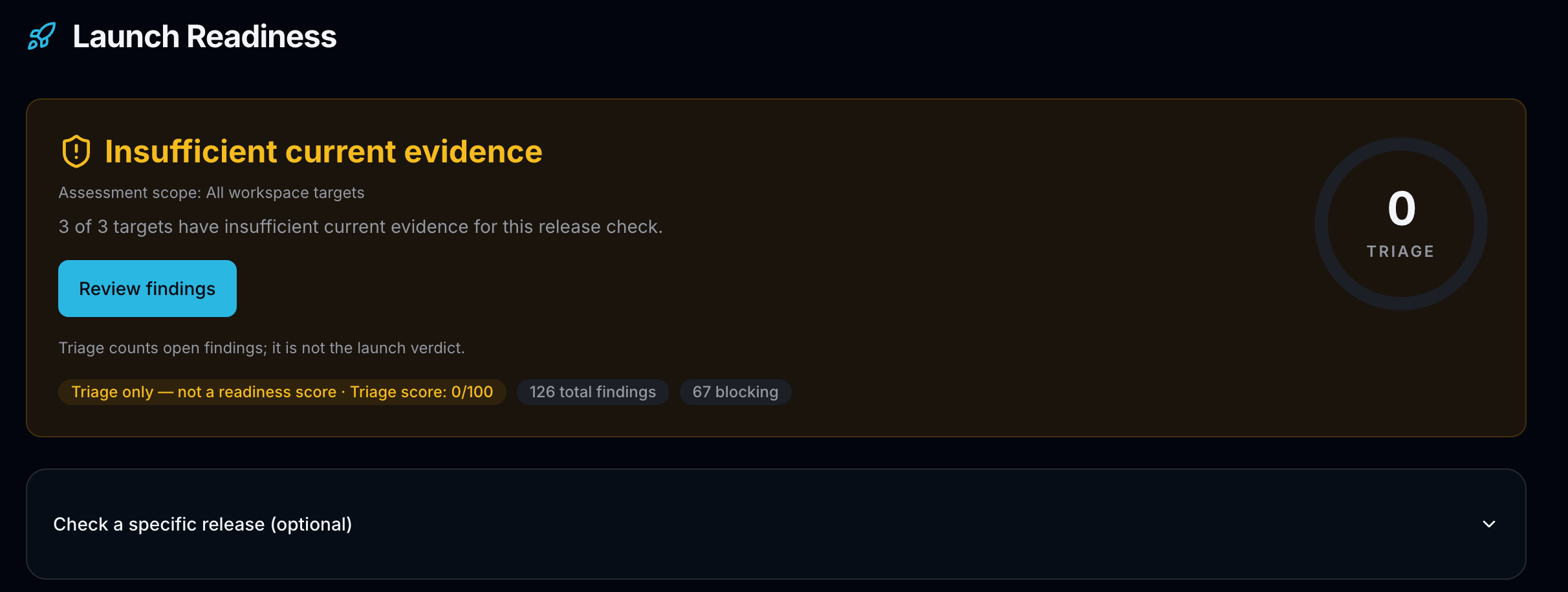
That limitation is part of the result. A release owner can see what remains to be checked instead of reading an empty list of findings as proof that the application is secure.
Source material
- Read the evidence methodology
How LyraShield separates detected, retest-confirmed and inconclusive findings.
- Inspect the public repository
Project documentation, evidence states and release-boundary definitions.